
1940 Farmall B
Quick info
Serial number: FAB9095
Year: 1940
Horsepower: 16
Owned since August 2023

My story
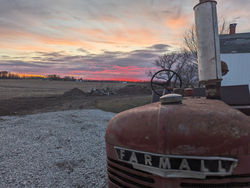
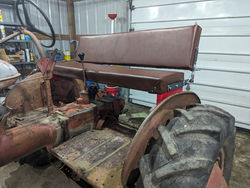
I bought this tractor from a guy between Kalona and Wellman. It was non running in exactly the condition seen here. The previous owner got it at an auction and it sat outside for a while before he sold it to me. The story before that is unknown to me. I originally intended to use it for parts for my Farmall Super A. After getting it home though I wanted to try driving it. Once I got the bugs cleaned out of the carburetor it fired right up and ran great. It took a while for it to grow on me but I eventually started to like it too much to take it apart. It is a very fun and easy tractor to drive and I decided to build a bench seat so I could take my girlfriend on rides with me. The size and maneuverability make it very easy to take to shows and parades. I find that it handles long drives better than many of the other tractors that I have. As I looked deeper into the specifics of this tractor I realized the uniqueness behind this one. I haven't seen many Farmall B's with a single front wheel. This tractor was also an early one. There were a wide variety of production changes made throughout the years and this tractor preceeds all of them that I have found. Perhaps the most unique feature on this tractor to me though is the fact that it was built to run on distillate fuel and it still had the signs of it.
Distillate was a heavy fuel similar to kerosene that was used because it was cheap and easy to get. Many tractors were built to run on it but as gasoline became more affordable most tractors , including mine, were either partially or completely converted to gas only because it offered many benefits. This tractor still had the original distillate manifold, carburetor, and engine hood though. I have pieced together most of the other missing components. I have not confirmed yet but I suspect that this tractor also has low compression pistons (around 4.4 vs 5.6 for gas engines) that would have been used when burning distillate. I am very excited to be able to show a distillate tractor with most of the original parts still on it.
I have built this tractor to go on tractor rides. To make the tractor meet minimum speed requirements for some rides I have swapped the stock governor spring with a Farmall 240 spring. The engine now runs happily at about 2000 rpm and it will go about 14mph. Luckily this tractor handles very well going that fast. I built the bench seat and it can comfortably seat 3 people. The restoration started in the fall of 2024. I learned a lot about the likely rough past that my tractor has had while restoring it.
 |  |  |
|---|---|---|
 |
The restoration
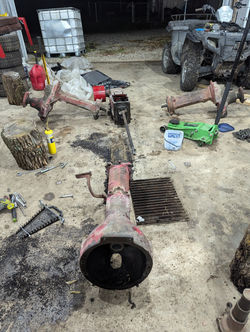
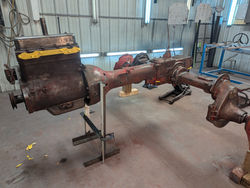
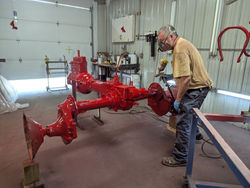
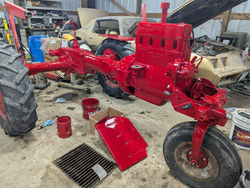
Restoration started in the fall of 2024. The engine was in great condition but the transmission got all new bearings and seals and a new clutch was installed. Most parts of the frame were wire brushed in prep for paint. Removing a few layers of paint revealed a lot about this tractor. the engine block has been welded at the front before where it connects to the steering bolster. There was also a layer of white paint or primer in some places between the factory paint and the last paint job. Part of both of the axle housings were broken off probably from pulling on an attachment wrong. one brake drum was even wearing through the cast iron housing. A variety of other old repairs were also uncovered beneath the grease and dirt. And I have to admit I added a few of my own repairs too.
 |  |  |
|---|---|---|
 |  |  |
 |  |  |
 |  |
Production run changes
The serial number being 9059 put this tractor being built before any production run changes were made from what I can tell. The hood and grill are held on be dzus screws. Later tractors used J hooks. This tractor is hand start only. In fact there isn't a ring gear on the flywheel and the bellhousing doesn't have a hole to install a starter. Later tractors just used a cover over the starter hole if the option wasn't added from the factory. Since there was no electrical system on this tractor the fan shaft only has one belt pulley whereas most tractors had two belt pulleys on the fan shaft, one was used to run the generator. The serial number tag was also slightly different on this tractor. It was installed on the sheet metal in front of the pedals rather than on the seat bracket as usual. The clutch cover panel is also stamped steel instead of cast iron. There are also some internal differences to the tractor. This tractor does not have the additional oil slinger gear inside the transmission that was added later. This was made up for though by an oil slinger plate attached to the pto.
Specifications
-
Chassis
-
Weight: 2000lbs
-
Width: 64-92in
-
Length: 108in
-
-
Engine
-
PTO HP: 16
-
Drawbar HP: 14.7
-
RPM: 2000 modified
-
Displacement: 113ci (1.9L)
-
Cylinders: 4
-
-
Transmission
-
Top speed: 14mph
-
Gears: 4 forward, 1 reverse
-
History
The Farmall B was introduced in 1939 at a price of $770 along with the Farmall A, M and H as a part of Farmall's new letter series tractors. It shared most of its parts with the narrower Farmall A. 75,241 Farmall B tractors were built in total. The offset seat was intended to improve visibility while cultivating. It was a general purpose utility tractor that could be used for anything from plowing and cultivating to mowing and hauling. An exhaust lift was optional and could be used on some implements due to a lack of hydraulics. The Farmall B was discontinued in 1947 and succeeded by the Farmall C, a heavier, more powerful version of the B that shared many of the same parts but offered many needed improvements. Farmall B tractors are still popular for mowing lawns using woods belly mowers or similar thanks to the very tight turning radius. They are also popular parade and show tractors because of the width and design making it very easy to add an additional seat for riders.